


Why Bed Bugs Keep Coming Back in Lagos Homes — And What to Do
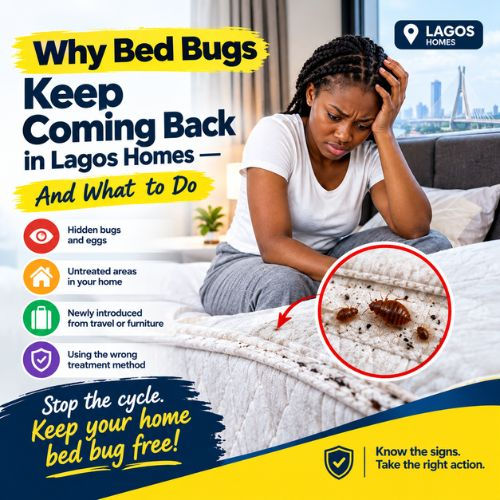
You've treated your room, washed your bedsheets, cleaned your mattress—and somehow, the bed bugs are back.
If this sounds familiar, you're not alone. Bed bug infestations can be particularly frustrating because these tiny pests are excellent at hiding in places that are easy to overlook.
But why do bed bugs keep coming back?
Usually, the problem isn't that they magically appear again. Some bugs or eggs may have survived the first treatment, or bed bugs may have been brought back into the home.
Here's what Lagos homeowners should know.
1. You Only Treated the Bugs You Could See
One of the most common mistakes is focusing on visible bed bugs.
Seeing a bug crawling across your mattress doesn't mean that it is the only one in the room. Bed bugs can hide in:
Mattress seams
Bed frames
Headboards
Cracks and gaps
Sofas
Behind furniture
Curtains
Carpets
Other dark, protected areas
If these areas aren't properly inspected and treated, surviving bugs can continue the infestation.
What to do
When treating bed bugs, inspect the entire sleeping area, not just the top of the mattress.
Pay close attention to seams, joints, cracks and other potential hiding places.
2. Bed Bug Eggs May Have Survived
Bed bug eggs can be difficult to notice because they are very small and may be hidden in protected areas.
This means that eliminating the adult bugs you can see doesn't necessarily mean the infestation is completely gone.
New bugs can emerge later, making it seem as though the infestation suddenly returned.
What to do
Follow the instructions for your chosen bed bug treatment carefully, including any instructions about repeat applications or follow-up treatment.
Don't assume that one application automatically means the entire infestation has been eliminated.
3. You Treated the Mattress but Not the Rest of the Room
Your mattress may be the first place you notice bed bugs, but it may not be the only place they are hiding.
Bed bugs can move between the mattress, bed frame, headboard and nearby furniture.
If only one area is treated, untreated areas can allow the infestation to continue.
What to do
Inspect and appropriately treat the areas surrounding the bed as well.
Always follow the product label and never apply a pesticide to a surface or item unless the label specifically allows it.
4. Clutter Gives Bed Bugs More Places to Hide
Clothes, bags, boxes and other items around the bedroom can create additional hiding spots.
A cluttered room can also make it harder to inspect the area properly.
What to do
Keep the area around your bed as clear as reasonably possible.
Wash appropriate bedding and clothing according to their care instructions, and keep cleaned items separated from potentially infested items.
5. You May Have Brought Them Home
Bed bugs can sometimes enter homes through luggage, clothing, bags, furniture and other belongings.
For example, someone may travel to another location, unknowingly pick up bed bugs, and bring them home.
Second-hand furniture can also introduce an infestation if it has not been properly inspected.
What to do
After travelling, inspect luggage and belongings before putting them near your bed.
Be particularly careful when bringing used mattresses, sofas or upholstered furniture into your home.
6. The Infestation May Be Larger Than You Realize
If you're finding bed bugs in more than one room, the infestation may have spread beyond the original sleeping area.
This is one reason repeatedly treating only one mattress may not solve the problem.
Inspect other bedrooms, sofas and areas where people regularly rest.
7. The Treatment May Not Be Suitable for Bed Bugs
Not every household insecticide is designed to control bed bugs.
Using an unsuitable product—or using a suitable product incorrectly—may result in poor control.
When selecting a bed bug control product, check that it is specifically labelled for bed bugs and carefully follow the manufacturer's instructions.
What Should You Do If Bed Bugs Keep Coming Back?
If you've already treated your home and the problem continues, don't simply keep spraying the same areas randomly.
Instead:
Step 1: Inspect the entire sleeping area.
Step 2: Identify likely hiding places.
Step 3: Wash and appropriately handle bedding and clothing.
Step 4: Reduce clutter around beds and furniture.
Step 5: Use a bed bug treatment product according to its label.
Step 6: Follow any instructions regarding repeat treatment.
Step 7: Monitor the area for continued activity.
If the infestation is extensive or continues despite proper treatment, consider contacting a qualified pest-control professional.
Can You Prevent Bed Bugs From Coming Back?
You can reduce the chances of another infestation by making inspection part of your routine.
After travelling, inspect luggage before storing it. Be cautious with second-hand furniture, especially mattresses, sofas and upholstered items.
Also, don't ignore early signs. Finding and treating an infestation early can make the problem easier to manage.
Final Thoughts
If bed bugs keep coming back in your Lagos home, the problem may not be that the treatment "didn't work" at all. Hidden bugs, surviving eggs, untreated areas or newly introduced bed bugs can all contribute to continued infestations.
The most effective approach is to identify where the bugs are hiding, treat the appropriate areas correctly, follow the product instructions and monitor the situation afterward.
If you're looking for a convenient way to tackle a bed bug problem at home, choose a product specifically intended for bed bug control and use it exactly according to its label.

Comments